Answer Engine Optimization (AEO): The New Frontier in AI-Driven Search
Introduction: The Rise of Answer Engines
The way people search for information online is undergoing a seismic shift. For over two decades, Google and other search engines operated as directories of links. Businesses optimized websites to rank as high as possible on the search results page, driving traffic through clicks. But in 2025, search behavior looks very different.
Instead of clicking through dozens of websites, users are increasingly turning to AI-powered answer engines like ChatGPT with browsing, Google's AI Overviews, Perplexity, and Microsoft Copilot. These systems don't simply list websites—they provide direct answers, summarizing information in natural language. For businesses, this trend introduces a new challenge: how do you make sure your company is part of those AI-generated answers? This is where Answer Engine Optimization (AEO) comes in.
What Is AEO and How It Differs from Traditional SEO
Answer Engine Optimization (AEO) is the process of tailoring your content so that AI systems—whether it's Google's AI Overviews or a standalone chatbot—recognize it as authoritative, trustworthy, and worthy of citation.
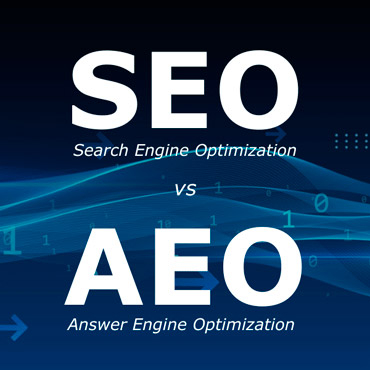
Unlike Search Engine Optimization (SEO), which focuses on link ranking, AEO is about becoming the answer itself. It requires:
- Structuring content in a way that machines can easily parse.
- Building authority signals so AI considers you credible.
- Anticipating natural-language questions instead of just keywords.
In other words: SEO helps you rank; AEO helps you get quoted.
How AI Assistants Build Responses
When an AI system responds to a query, it doesn't “think” in the way humans do. Instead, it draws on three key data sources:
- Trusted websites: government domains, major news outlets, scientific and educational platforms.
- Knowledge graphs and structured databases: such as Wikipedia, schema.org, product databases.
- Indexed content with authority signals: websites with strong backlink profiles, expertise, and up-to-date information.
If your content is formatted with FAQ sections, schema markup, bullet lists, and clear headings, you dramatically increase your chances of being included in an AI-generated response. Additionally, E-E-A-T (Experience, Expertise, Authoritativeness, Trustworthiness) remains crucial. AI systems are trained to prioritize content that demonstrates clear expertise and transparency.
Getting Quoted: How to Land in AI Answers and Citations
To optimize for AEO, businesses should:
- Write for questions: Instead of only optimizing for "SEO audit tool," create content answering "What is the best tool for a website SEO audit?"
- Use structured data: Schema.org markup for FAQ, HowTo, Product, Review, and Organization types makes it easier for AI to parse.
- Build concise answers: Short summaries (40–80 words) that directly address questions often get quoted.
- Establish authority: Cite reliable sources, include expert opinions, and show authorship.
- Keep it fresh: AI systems prefer up-to-date data—publishing new content and updating old posts boosts visibility.
For example, a page titled "How to Check Backlinks for Free" that includes a step-by-step list, statistics, and a schema-enabled FAQ is more likely to be cited than a generic blog post.
Numbers and Metrics: AEO Traffic in 2025
Data shows that AEO is not just a trend—it's a measurable traffic source:
- A 2025 study found that AI Overviews cut 30–45% of clicks from organic results in tested queries.
- In the U.S., AI-driven search traffic doubled between mid-2024 and early 2025, reaching 5.6% of total desktop search traffic.
- Businesses that optimized for AEO reported dramatic gains: one case study showed +84% organic traffic growth, +345% traffic from AI answers, and +92% SERP visibility after adopting AEO strategies.
- Surveys suggest 80% of users rely on AI answers at least 40% of the time, reducing reliance on traditional clicks.
In other words, appearing in AI answers is already the difference between losing and gaining market share.
Does AEO Replace SEO?
Despite the hype, AEO does not replace SEO—it complements it.
- SEO still generates more than 50% of traffic for many websites.
- AEO drives brand visibility and trust, especially when users see your company quoted in AI assistants.
- Transactional searches (“buy running shoes online”) remain dominated by traditional SEO and paid ads.
- Informational searches (“what is backlink monitoring?”) are increasingly shifting to AI answers.
The winning strategy in 2025 is SEO + AEO together. SEO ensures your website remains discoverable; AEO ensures your brand is cited as an authority.
Future Outlook: AEO Over the Next 3–5 Years
- By 2026, Gartner predicts that search engines will lose ~25% of traffic to AI chat interfaces.
- Zero-click searches will keep growing—where the user finds their answer without ever leaving the results page.
- AI answers will become multimodal, integrating text, video, and voice.
- Studies show referrals from AI engines can convert at up to 9× higher rates than classic search referrals, because users treat AI as a trusted advisor.
Businesses that invest in AEO now will be ahead of the curve by the time this transition becomes mainstream.
Additional Considerations: Beyond Visibility
AEO also brings new challenges:
- Energy costs: AI answers consume 60–70х more energy than classic search queries, raising sustainability questions.
- Legal risks: Companies like Chegg have already accused Google of antitrust violations, claiming AI Overviews "steal" their content without fair attribution.
- Ethics and control: Brands must prepare for their content being paraphrased by AI, sometimes without clear credit.
This means businesses should balance AEO with legal and ethical considerations while optimizing visibility.
Actionable Recommendations for Business
Practical steps to start with AEO today:
- Create FAQ sections on all key landing pages.
- Implement schema markup for products, articles, and organizations.
- Focus on concise expert summaries alongside long-form content.
- Track citations in AI answers using monitoring tools.
- Strengthen authority through backlinks and content audits.
Seogismo helps businesses prepare for AEO by:
- Running comprehensive SEO audits to fix technical gaps.
- Monitoring and analyzing backlinks to boost authority.
- Checking structured data implementation to ensure AI readiness.
- Providing keyword and competitor tracking, showing where you can break into AI citations.
Answer Engine Optimization is no longer optional—it's the next chapter of digital marketing. AI assistants are already reshaping user behavior, and the companies that adapt early will capture the lion's share of future traffic.
SEO remains the foundation, but AEO is the accelerator that positions your brand as the trusted answer.
If you want to ensure your website is ready for the AI-first era of search, start with an SEO audit on Seogismo—and take the first step toward being the answer users (and AI) are looking for.