SEO in 2025: The Ranking Factors That Really Matter
As we progress through 2025, the SEO landscape is constantly shifting. Emerging technologies, richer data, and AI-driven search have raised the bar for what actually drives rankings today. Below is a comprehensive breakdown of the ranking factors SEO professionals need to prioritize—supported by data and expert voices.
1. High-Quality Content & Search Intent
Content remains at the core of effective SEO. The days of keyword stuffing are long gone; now, Google prioritizes depth, clarity, and alignment with search intent. This is what makes content succeed—not length, but relevance and usefulness.
"Quantity is meaningless without authority," says Olga Andrienko, VP of Brand Marketing at Semrush. "Quality backlinks remain one of the most reliable indicators of trust and authority in the eyes of search engines."
Research shows that long-form content exceeding 3,000 words earns up to 3.5x more backlinks than shorter pages—proof that depth and detail drive visibility.
Moreover, 77% of backlinks go to long-form pieces, and infographics boost backlink acquisition by 178%.
2. Backlinks & Authority Signals
Backlinks remain a bedrock of Google's ranking system. The top-ranking pages earn, on average, 3.8x more backlinks than those in positions 2–10. That's the kind of advantage that can't be ignored.
Shockingly, 94% of all content gets zero backlinks—making link-building a critical competitive edge.
Statistics confirm that 79.7% of SEOs see link-building as essential for success—and 93.8% prioritize quality over sheer quantity.
A Reddit user insightfully noted:
"One solid backlink from, say, Forbes can do way more for your rankings than a hundred low-quality links. Google's getting smarter at detecting authority and trust signals."
Emerging data also shows that only 1 in 20 pages without backlinks receives any organic traffic—a stark reminder of the power of external endorsement.
3. User Experience (UX) & Technical Health
Google's Core Web Vitals, mobile optimization, and secure, fast page experience are non-negotiable ranking factors in 2025. If your site lags, so will your ranking—regardless of content quality.
While specific percentages aren't always clear, industry consensus indicates that improved page speed and UX directly correlate with better engagement, lower bounce rates, and higher rankings.
4. E-E-A-T: Experience, Expertise, Authoritativeness, Trustworthiness
For YMYL (Your Money, Your Life) topics especially, E-E-A-T remains one of the most important ranking considerations. Clear author credentials, reliable sourcing, and original insight all add trust signals that Google respects.
The recent leak of internal Google documents further emphasizes this: signals like click rates, domain authority (though not officially used), and website trust are still influential.
As SEO expert Barry Schwartz notes, "The key takeaway is that Google tells us one thing—but internal data shows another."
5. Intent-Matching & Comprehensive Coverage
Aligning with user intent is essential. Google favors content that anticipates related questions and fleshes out topics fully. A well-structured answer with logical flow outperforms broader, less-focused content.
6. Generative & Answer Engine Optimization (GEO / AEO)
AI-driven search is dominating 2025. With AI chatbots and Google's generative snippets emerging, optimizing for AI visibility is critical.
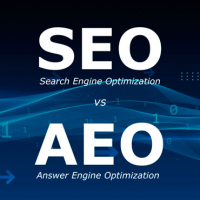
GEO (Generative Engine Optimization) or AEO (Answer Engine Optimization) emphasizes structured, concise content—bullet points, FAQs, tables—designed for easy ingestion by AI systems.
Worstell (cited in New York Magazine) puts it plainly:
"Content that's easy to cite in AI—like tables, rankings, or bullet points—gets picked up in snippets and AI overviews."
This approach may help content capture "position zero" results and featured AI responses.
7. SERP Features & Click-Through Rates
Beyond ranking, SERP features (knowledge panels, FAQs, media galleries) influence click-through rates (CTR). A study of 6 million clicks across 67,000 keywords confirms their profound impact on user behavior.
8. Holistic Framework: Content, Authority, UX, Technical (XACT)
For 2025 and beyond, SEO success relies on a balanced mix of four pillars—Content, Authority, UX, and Technical—often referred to as XACT. Consistent optimization across all areas is now the standard.
Final Thoughts for SEO Specialists
In 2025, effective SEO is multidimensional:
- Content must be deep, purposeful, and aligned with user intent.
- Backlinks still matter—and more than ever, quality and relevancy outshine quantity.
- UX and technical performance are essential to sustain SEO gains.
- E-E-A-T and authority are critical for credibility—especially in sensitive niches.
- AI optimization (AEO/GEO) is vital for capturing AI-driven search visibility.
- SERP features dramatically affect CTR and visibility.
- Balanced execution across all pillars (XACT) ensures sustainable SEO growth.
By championing these strategies—backed by data, expert insight, and industry trends—you'll be equipped to navigate and excel in Google's rapidly evolving ranking ecosystem in 2025.